An exclusive interview by RCAK – Regional Cricket Association Karachi
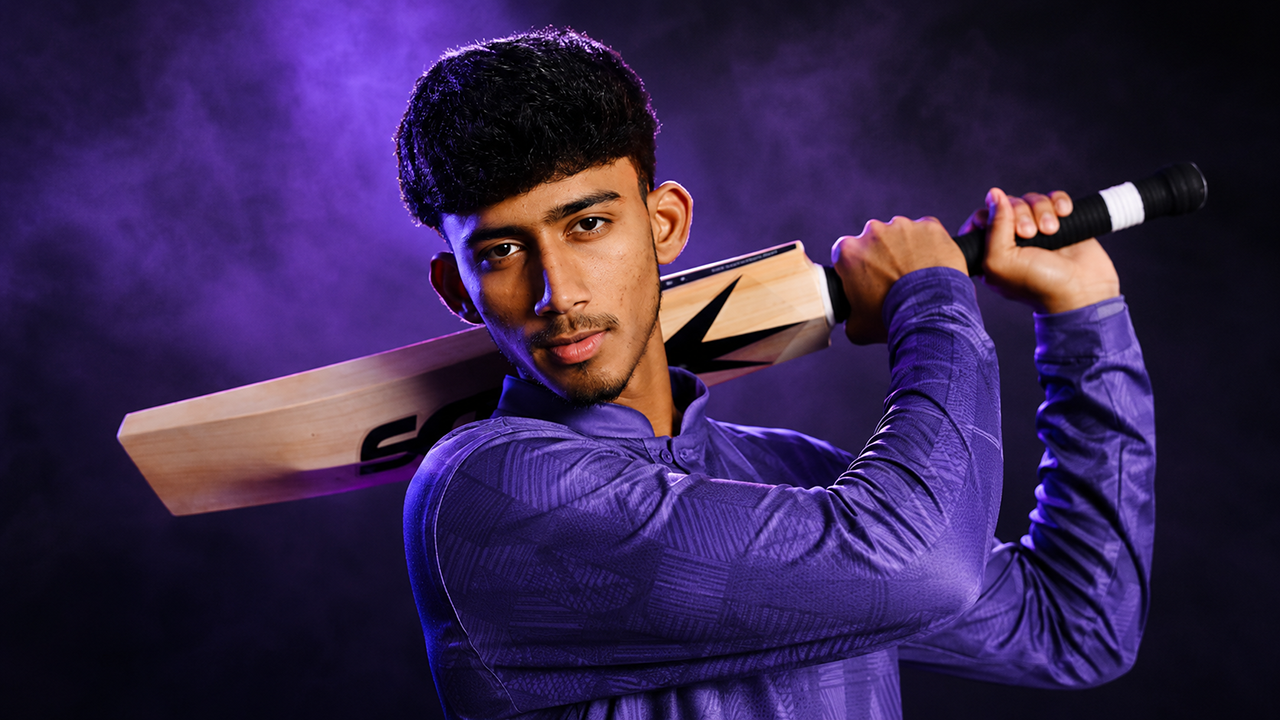
As part of RCAK’s ongoing mission to highlight and promote emerging cricketing talent from Karachi, we recently sat down with rising young batter Haroon Arshad. From tape-ball beginnings in local academies to representing Karachi at first-class level and being part of the Karachi Kings setup in the HBL PSL, Haroon’s journey reflects the modern pathway of a Karachi cricketer—full of passion, learning, and constant competition.
Here is what the young batter had to say in response to our questions.
From Karachi’s Grounds to Professional Cricket
Question 1: Those who aren’t aware of your cricketing journey, how would you describe yourself to the world?
Haroon begins with a simple introduction that reflects his steady rise through the ranks of Karachi cricket.
“First of all, Assalamualaikum. My name is Haroon Arshad. I am a right-handed batsman from Karachi. I started playing tape-ball cricket in an academy. Then I started playing professional cricket. I played Under-13, Under-16, Under-19, then first-class cricket from Karachi, and lately I was a part of Karachi Kings in HBL PSL.”
His journey is a reflection of many cricketers from the city, where tape-ball cricket often becomes the first classroom of talent before structured pathways take over.
A Father’s Influence: Where It All Began
Question 2: How did your interest in cricket begin? What was the first moment you thought of playing seriously?
For Haroon, cricket was not discovered—it was inherited through inspiration at home.
“My father used to play tape-ball cricket and he was very good at it. I started playing with him, and I used to go with him to matches. From there my interest grew, and then I came into professional cricket.”
Like many Karachi cricketers, his earliest memories of the game are rooted in local grounds, family influence, and a natural attraction to the sport.
The Real Test Begins in Senior Cricket
Question 3: What are the challenges for a cricketer in Karachi cricket? How tough is it to reach your level?
Haroon explains the reality of progressing from age-group cricket into the senior circuit. Moving through age-group cricket is one challenge—but stepping into senior cricket brings an entirely new level of pressure.
“When you play Under-13, Under-16 and Under-19, you are in an age group. When you enter first-class cricket, there are senior players in the team. Keeping your place in the team gets difficult, but if you grind hard, you get to learn from them, which helps in your future journey.”
Haroon’s words reflect a reality many young players face in Karachi’s competitive cricket structure—where talent alone is not enough, and consistency becomes the true test.
Learning in Senior Cricket Environment
Question 4: How has your journey been after joining senior Karachi cricket from Under-19?
He describes his experience in senior cricket as a positive learning phase.
“It’s been a very good journey. I have learned a lot. We get to learn from senior players. The competition is very good and the dressing-room environment is really good.”
This exposure, he believes, is shaping his growth as a more complete cricketer.
PSL Exposure: Learning from the Best in the World
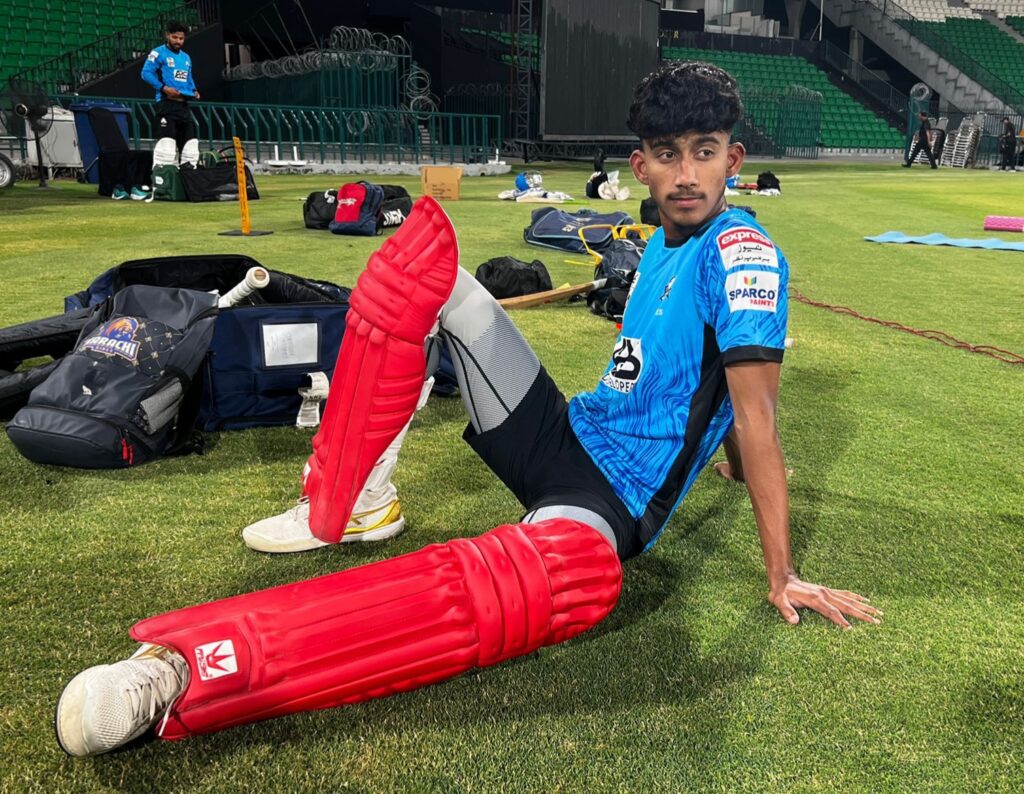
Question 5: You played PSL with Karachi Kings alongside stars like David Warner and Moeen Ali under coach Ravi Bopara. What did you learn?
Haroon reflects on his exposure to international cricket at the highest level. One of the most significant milestones in his career so far has been his experience with Karachi Kings, where he shared space with international stars and experienced coaching staff.
“They are the world’s best players. I have learned a lot in their company—from practice and training perspective, batting perspective, and match scenarios. Being amongst such players is itself good because you get to learn their work process and how the other part of the world goes about things.”
For a young cricketer from Karachi, such exposure becomes a learning curve that extends beyond the field.
Belief in Red-Ball Cricket
Question6: Which format do you prefer, red-ball or white-ball cricket?
In an era dominated by T20 cricket, Haroon still places his belief firmly in the longer format.
“I love red-ball cricket more. When you play red-ball cricket, you know where you stand and how big a player you are. If you make your name through red-ball cricket, white-ball cricket follows itself.”
His mindset reflects discipline and a long-term approach to building a solid cricketing career.
Inspirations and Learning from Greats
Question 7: If you could train with any Pakistani superstar, who would it be?
Haroon names two players he admires for their excellence and consistency.
“I would love to train with Younus Khan and bat with Babar Azam.”
These choices highlight his admiration for players known for consistency, mental strength, and technical excellence. These two choices show something important:
Younus Khan = learning the foundation of great batting (grit, patience, temperament)
Babar Azam = learning modern elite execution (consistency, flow, pressure handling)
So Haroon isn’t just naming famous players—he is essentially mapping out his development path: build the base from legends of temperament, and sharpen it against modern-day excellence.
Eyes on One Goal: Playing for Pakistan
Question 8: Where do you see yourself in the next five years?
Despite his growing experience, Haroon remains grounded and focused on the ultimate dream.
“No, not really. My only focus is playing for Pakistan and playing long for Pakistan. I don’t really focus on the future too much. When tournaments come, I prepare accordingly.”
This clarity of purpose reflects the mindset required at the highest level.
Drawing Inspiration from a Rival: Chasing Bigger Dreams
Question 9: Who is your inspiration in cricket?
Haroon’s inspiration comes from modern-day greatness.
“My inspiration in cricket is Virat Kohli.”
It tells a few strong things about his mindset and character—mostly very positive from a sporting perspective. He is secure in his own ambition. Choosing a “rival” like Virat Kohli as an inspiration shows he is not limited by boundaries of nationality or rivalry narratives. Instead, he is focused on excellence wherever it exists. It reflects his competitive intelligence, confidence not contradiction. Majority young players don’t name the rivals, but he is comfortable acknowledging greatness even on the other side. It indicates emotional maturity and clarity about his own goals. He is pointing towards a high-performance mindset: he is drawn to intensity, consistency, and pressure handling traits strongly associated with Virat’s career. That means he is likely modelling himself on standards rather than sentiment.

Final Word
Haroon Arshad’s story is still in its early chapters, but it already carries the shape of a serious cricketer in the making. From Karachi’s tape-ball grounds to first-class cricket and PSL exposure, his journey reflects not just talent, but steady progression through one of the most competitive cricket environments in the country. What stands out most is not just where he has reached, but how he thinks about the game. His respect for red-ball cricket, his willingness to learn from senior professionals, and his exposure to international standards in the PSL all point toward a player focused on long-term growth rather than short-term recognition. His journey is not complete, but it is clearly moving in the right direction—and if his mindset remains the same, it is a name worth following closely in the years ahead.
As RCAK continues its commitment to promoting local talent from Karachi, stories like Haroon’s remind us of the depth of cricketing potential in the city—waiting to be nurtured, supported, and given the right platform to shine.
