
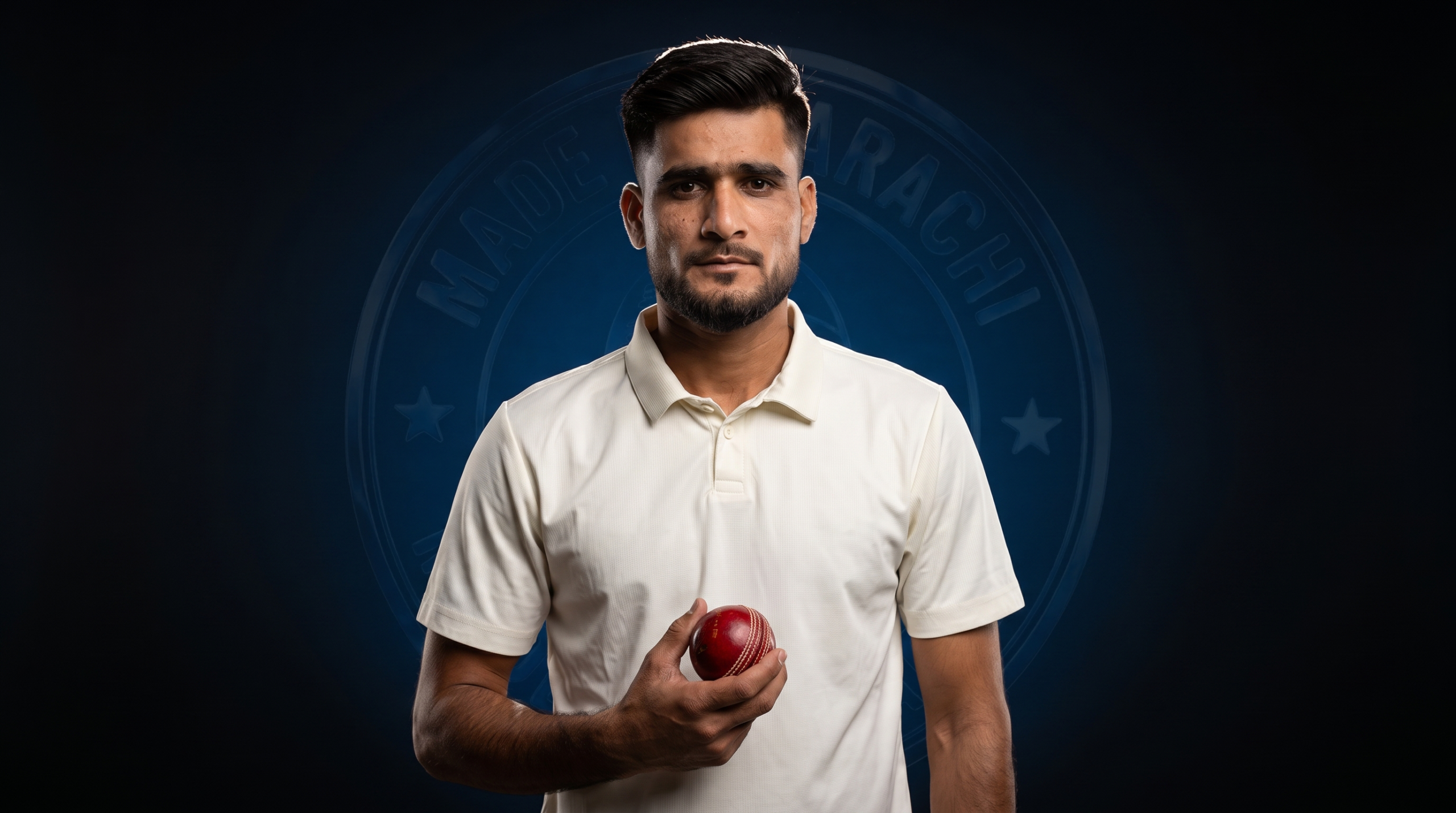
Karachi has always been a city where cricketers are not just made — they are tested every day. From tape-ball grounds to academy nets and eventually professional stages, only those who adapt survive. Saqib Khan is a 30-year-old right-arm medium-fast bowler from Karachi who has recently emerged as a highly productive pace asset in Pakistan’s domestic circuit.
In this conversation, he shares his journey, challenges, inspirations, and experiences at the higher levels of domestic and franchise cricket.
Q1: For those who don’t know you, what would you like to tell them about yourself? Where do you belong and how did your cricket journey begin?
“My name is Saqib Khan and I am a right-arm fast bowler. I belong to Mingora, Swat, but I have been living in Karachi since the beginning of my cricket journey. Initially, I used to live in Sher Shah, and now I am residing in Metroville.
Like many cricketers in Pakistan, I also started with tape-ball cricket. Later, when I moved towards hard-ball cricket, I joined Future Stars Cricket Academy under Sir Liaquat. That’s where my proper journey began.”
A typical Karachi pathway — tape-ball first, structure later. The academy shift is where intent turns into development.
Q2: You had quite a name in tape-ball cricket. When did you decide to move towards hard-ball cricket?
“Whoever plays cricket in Pakistan starts with tape-ball cricket. A few lads told me that I was a good fast bowler and should try hard-ball cricket. That’s how I made the switch. Alhamdulillah, I am successful so far.”
A small push from peers often becomes the first step toward professional cricket in Pakistan.
Q3: How tough is it for a young cricketer to make his place in Karachi cricket?
“Yes, it is very tough. When you are part of a team that has bowlers like Sohail Khan, Tabish Khan, and Mir Hamza, making a place becomes difficult. But if a person works hard, nothing is impossible.”
He also showed deep respect for the senior bowlers, referring to them as “Bhai”.
Karachi’s bowling pool is stacked with experience, making breakthrough chances limited and earned.
Q4: You came quite late into hard-ball cricket. What was the reason?
“Yes, sometimes every home has its own situation. I started late, but I was putting in effort for 7–8 years. The opportunity came late, but as the saying goes, ‘Der aaye, durust aaye.’ (Better late than never)”
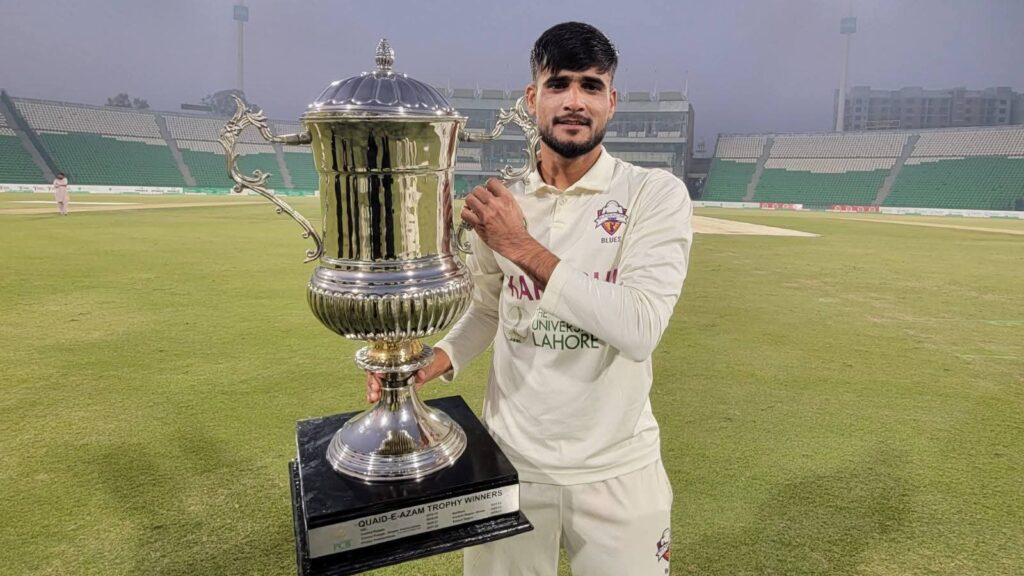
Unlike many Pakistani pace sensations who burst onto the scene in their teens, Saqib is a classic example of domestic perseverance. He made his proper First-Class debut later in life at the age of 29 during the 2024–25 season. Despite the late start, he immediately looked like a seasoned veteran, taking 71 wickets in his first 16 multi-day matches
Late entry, but long preparation — a common but underrated story in domestic cricket.
Q5: Your performances have been impressive in both red-ball and white-ball cricket. How do you prepare for different formats?
“Whichever the format is, preparation has to start early. We have been playing cricket for a long time — the main motive is to play cricket. Whether it is red-ball or white-ball, I prepare before the tournament and then adjust easily.”
Simple approach: early preparation and quick adaptation.
Q6: Who are your inspirations in cricket?
“I have two idols — Sir James Anderson and Dale Steyn. I started cricket watching them and try to bowl like them.”
A blend of swing and seam — two contrasting fast-bowling philosophies.
Q7: As an all-rounder, do you focus on power-hitting as well?
“Yes, whenever I go into the match, I try to add maximum runs for my team. After that, whatever happens, happens for the good.”
While his primary job is to dismantle top orders with his medium-fast deliveries, Saqib loves a swing of the bat. Interestingly, in just 26 First-Class innings batting mostly at number 9 or 10, he has smashed 17 sixes. His strike rate across formats is surprisingly high for a specialist bowler, highlighted by a gritty first-class half-century (54).
Lower-order contribution mindset — add value whenever possible.
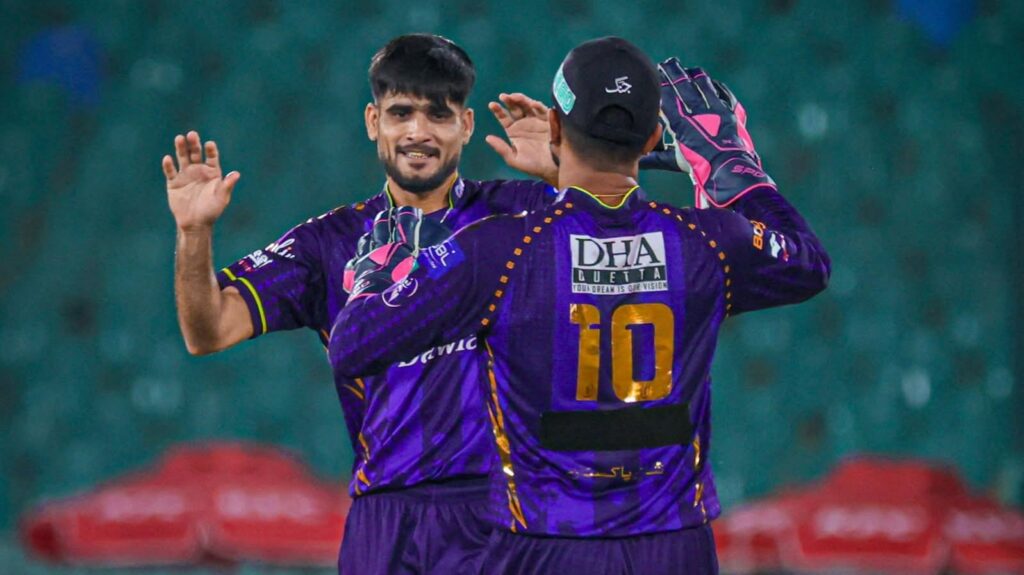
Q8: You were part of the HBL PSL with Quetta Gladiators. How helpful was that experience?
“The HBL PSL is a very big platform. When a young player gets selected, he learns a lot.
Sohail Tanvir supported me a lot. Our trainer Waqar, whom we call ‘Dada’, also supported me. Moin Khan, Azam Khan, and Saud Shakeel also helped me a lot.”
PSL exposure often becomes a learning ground beyond just match time — mentorship plays a key role.
Q9: In PSL, which batter did you enjoy bowling against the most? Who troubled you?
“I really enjoyed bowling to our Pakistan star Babar Azam and also to Srilanka’s Kusal Mendis. I got the chance to bowl against them in a match against Peshawar, and I enjoyed it a lot.”
Facing top-order international batters is where bowlers truly measure their progress.
Q10: What is your dream wicket?
“InshaAllah, if I get the chance to play Test cricket, I would love to take the wicket of Joe Root.”
A dream that reflects respect for the highest level of Test batting. Remember, If Joe Root continues playing until Saqib makes his debut, he could well be on course to become the highest run-scorer in Test cricket, even surpassing Sachin Tendulkar’s 15,921 runs. With Root already trailing by around 1,900 runs, dismissing him would truly be a dream wicket of the highest order.
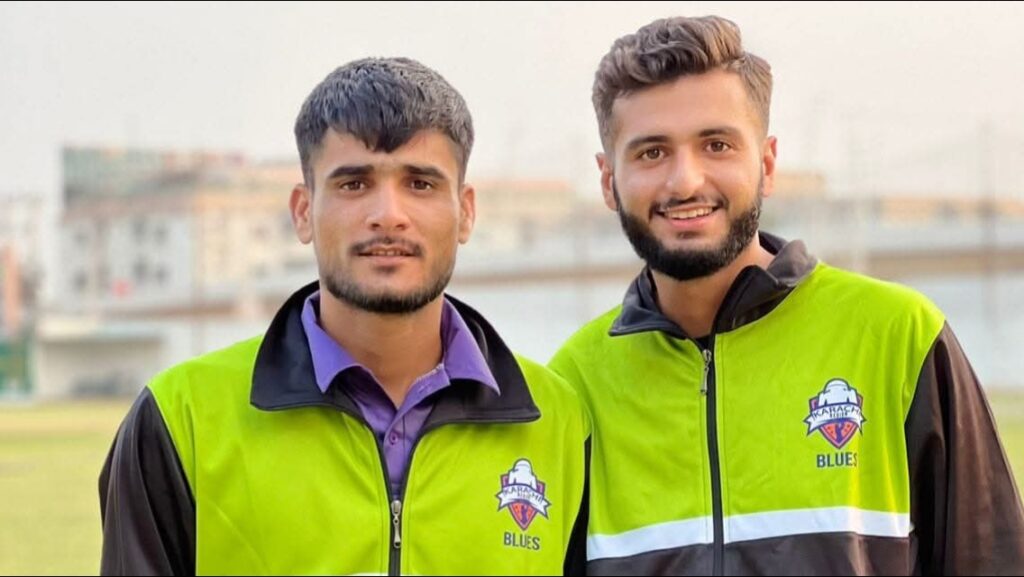
Karachi cricket continues to produce fast bowlers shaped by competition, pressure, and persistence. Saqib Khan’s journey is still in progress, but it already reflects the familiar Karachi blueprint — tape-ball beginnings, hard-ball struggle, and gradual exposure to elite cricket environments.
If he continues on this path, his name may soon move from emerging talent to established performer. RCAK wishes him good luck in his future challenges.
