
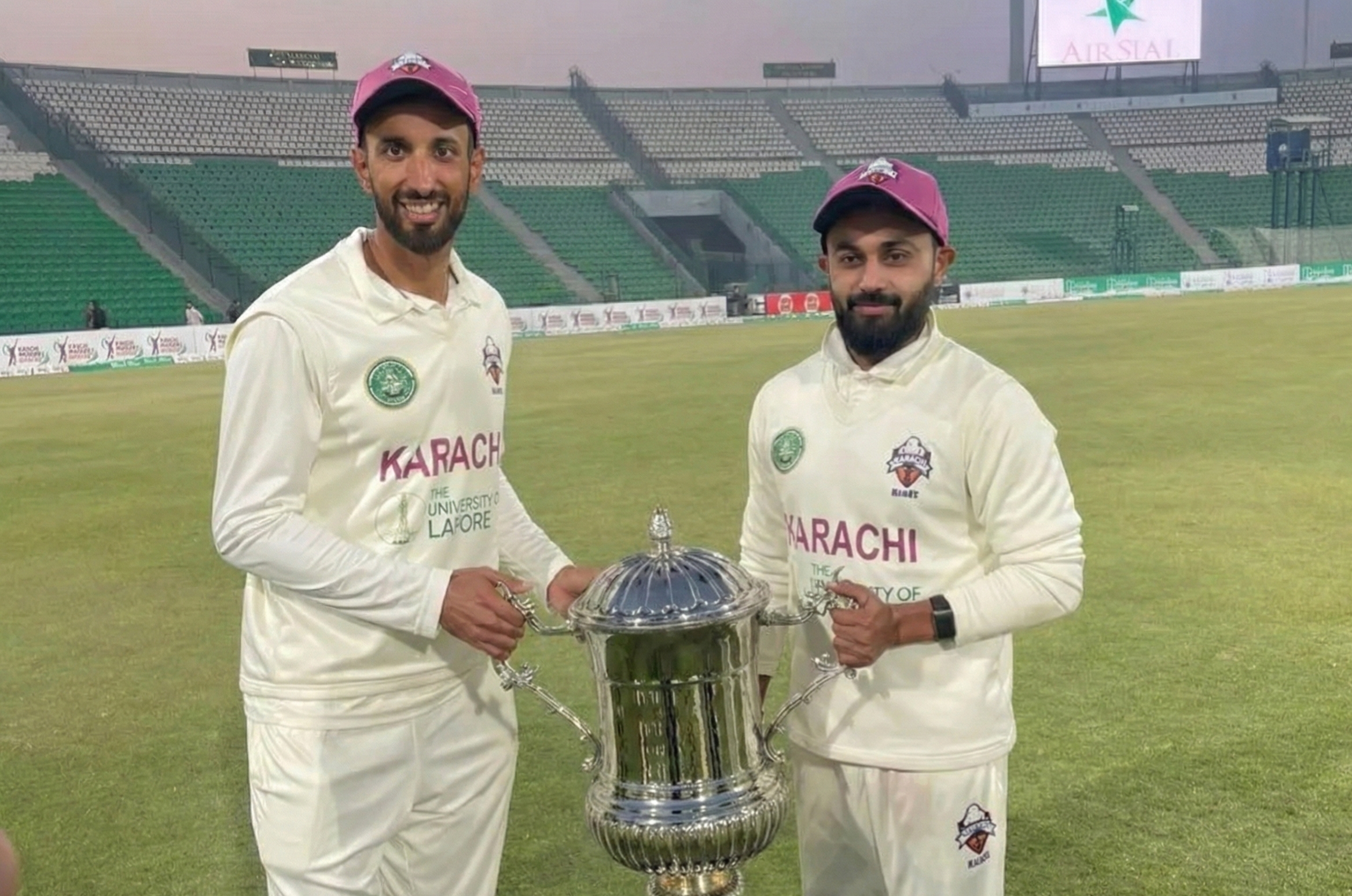
When Karachi Blues entered the final stretch of their Quaid-e-Azam Trophy campaign, the equation was brutal: win four matches in a row or bow out. What followed was a surge built not just on youthful brilliance, but on the calming, methodical presence of Shan Masood, whose return to the first-class circuit transformed both the mood and the method of Karachi’s march to the final.
Karachi didn’t merely win — they surged, dominated and outlasted opponents. At the centre of that shift was Shan, whose impact extended far beyond numbers, yet whose numbers were formidable.
He finished the season with 562 runs from just four matches at an extraordinary average of 112.40, including two hundreds and two half-centuries. But those figures only tell part of the story.
Karachi’s must-win streak began with a fragile top order and immense pressure. Shan’s early contributions were about stability: long stays at the crease, soft hands against the moving ball, and an ability to drain the energy out of opposition attacks.
His first big statement knock was a measured century that dragged Karachi out of trouble in a virtual knockout fixture, setting the platform for their first of four consecutive wins. That was followed by a series of vital half-centuries where Karachi were either wobbling early or chasing awkward targets.
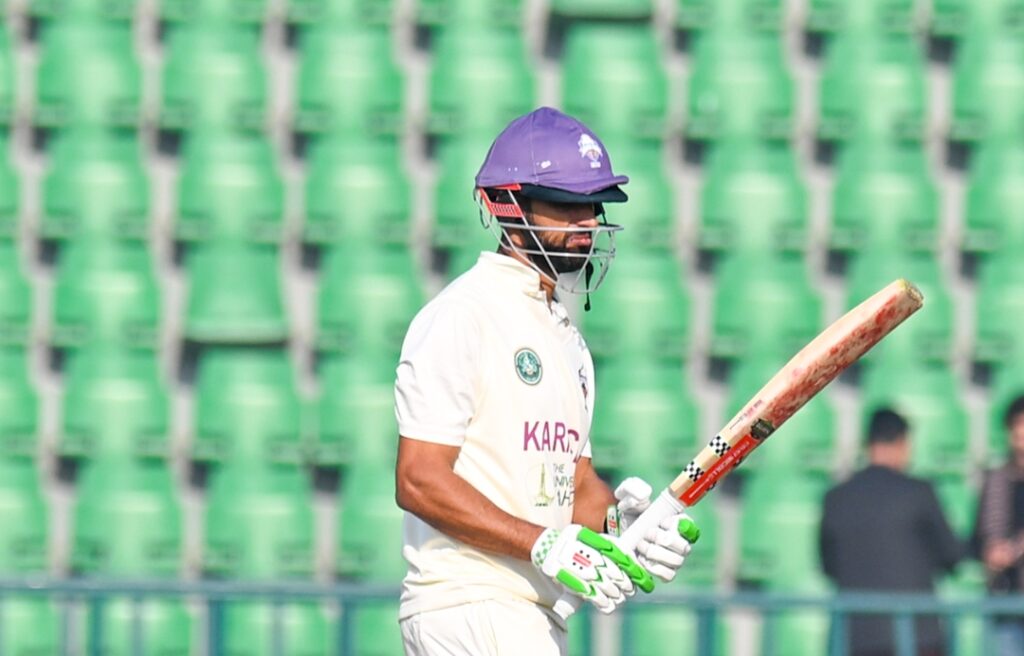
The defining innings came with his majestic 250 not out, a knock that crushed the opposition and announced Karachi as serious title contenders. It wasn’t just about volume of runs; it was about tempo — when to absorb pressure and when to accelerate.
In the semi-final-like Round 9 clash, Shan again stepped up with twin composure acts: a classic 70 in the first innings and a commanding 86 in the chase, guiding Karachi safely into the final. Those innings not only sealed qualification but also reflected the trust the dressing room placed in him.
Shan’s impact wasn’t limited to his batting. His presence added tactical clarity: sharper running between the wickets, smarter strike rotation in partnerships with Saad Baig and Saud Shakeel, and calm communication with the young batting group.
Karachi’s late-season rise was built on balance — Saad Baig’s run glut, Saqib Khan’s wickets — but Shan was the architectural beam holding the structure.
Amid Karachi’s desperate push for qualification, Shan quietly crossed another landmark: 13,000 runs in first-class cricket. It was a moment that underlined his longevity and class, achieved not in isolation, but in the heat of a campaign that demanded experience.
Karachi Blues didn’t just need runs; they needed reassurance when things tightened. Shan provided both. In a team suddenly stacked with emerging talent, he became the bridge between promise and performance.
