
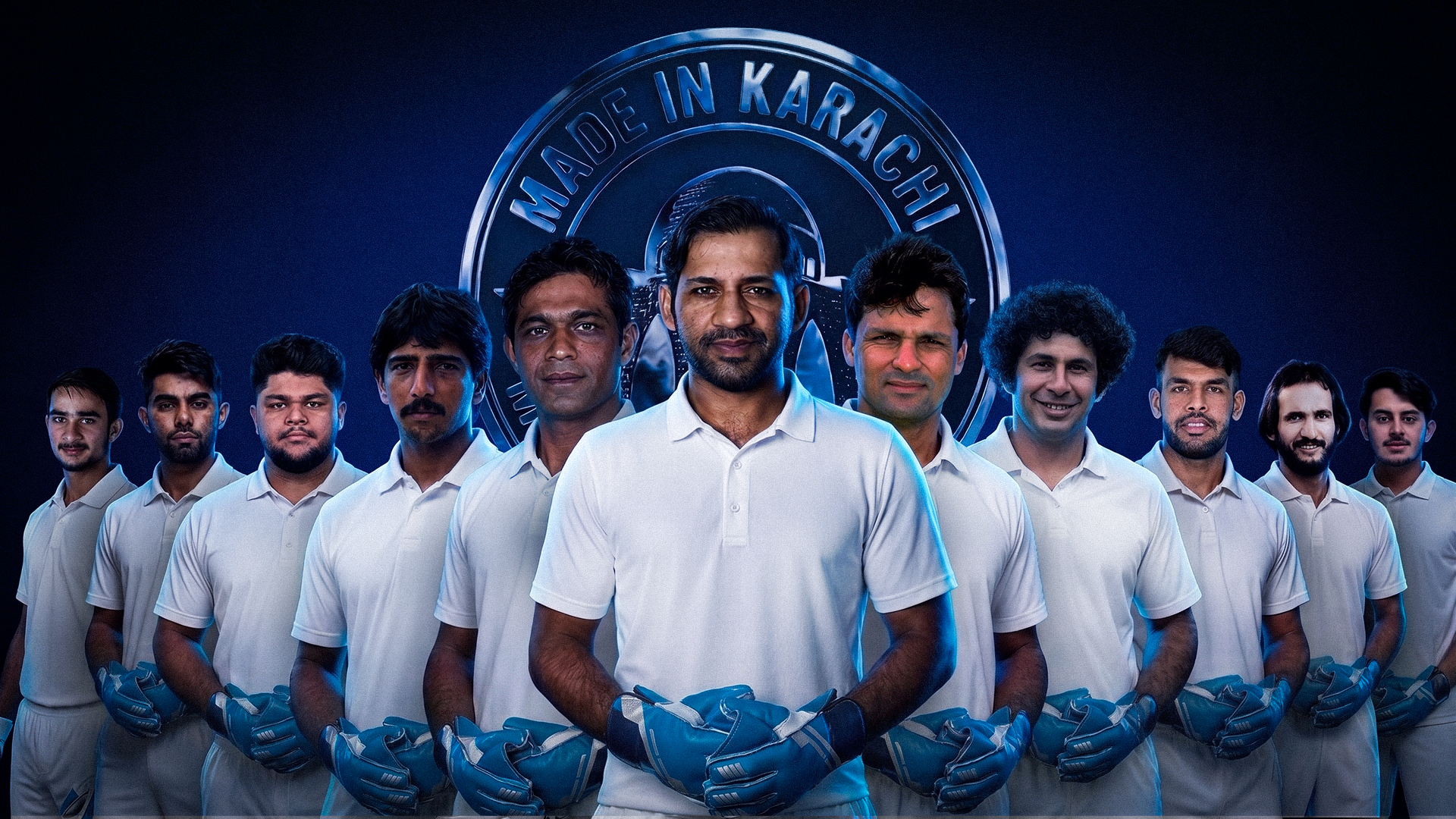
Every great city in Pakistan has its signature identity. Mention Sialkot, and the world instantly thinks of premium stitched footballs. Speak of Faisalabad, and the rhythmic hum of textile looms echoes in your mind. Across the map, our cities are proudly defined by a singular, iconic craft.
Then, there is Karachi.
Karachi refuses to be defined by just one thing. It is a city of layers, a chaotic masterpiece known for its street food, its restless nightlife, its cosmopolitan culture, and its deeply rooted obsession with cricket.
But if you look closely at Karachi’s cricketing DNA, the city hides a specialized superpower. Karachi is an assembly line, a veritable factory for elite wicketkeepers.
The Secrets of the Tape Ball Nursery
While many wonder how one city continuously produces world class stumpers, the real answer lies deep within the raw culture of Karachi’s street cricket. In the countless tape ball matches played across the city every single day, an unwritten rule shapes future legends. In these neighborhood games, the designated wicketkeeper often steps up to bowl their quota of overs. During those crucial moments, another batsman in the team is forced to step behind the stumps for two or three overs.
This temporary assignment changes everything. These young players may not know the textbook art of keeping initially, but they try their absolute best to fulfill the responsibility for their team. It is during these short, intense bursts that the spark is lit. A young batter looks around and realizes that while the streets are flooded with thousands of pure batsmen, adding a specialized extra skill set could make them truly unique and easy to fit in any team’s combination.
Make no mistake about it, wicket keeping is one of the toughest, most brutal jobs in the sport. It demands extreme, elite levels of physical fitness. To spend hours grinding behind the stumps and then instantly switch minds to anchor a long batting innings requires a phenomenal, iron clad physique. This grueling tape ball culture acts as the ultimate natural nursery. It is where raw batters develop a deep, lifelong passion for the gloves, working tirelessly on their reflexes until they grow up to become the icons of the nation.
From Wasim Bari to the Modern Vanguard
This deep lineage of complete players spans over many decades of Pakistan cricket history. The story began at the dawn of our journey with the legendary Wasim Bari, who emerged as the finest pure gloves man of his time, setting early historic standards with 290 international dismissals. He was followed by Taslim Arif, who famously smashed an unbeaten 210 against Australia to hold the highest individual Test score by a Pakistani keeper.
Imran Khan famously called Saleem Yousuf his tiger, relying heavily on his intense, fearless fighting spirit during high pressure battles in the nineteen eighties, where he ultimately secured more than 242 international dismissals.
Giants of the Global Stage and the 1992 Hero
Nowhere was this elite breed more evident than in the legendary, fierce competition between Rashid Latif and Moin Khan during the nineteen nineties. This intense rivalry did not just push both men to greatness, it elevated the entire standard of global wicket keeping. Rashid Latif was a purist’s dream, boasting glove work that was arguably the quickest and most technically sharp in Pakistan cricket history, finishing his career with more than 147 international dismissals.
Yet, when it came to matches played and sheer match winning longevity, Moin Khan stood as a monumental giant for Pakistan. Representing the nation across hundreds of international games, Moin anchored the defense by accounting for more than 434 dismissals alongside smashing over 6,000 runs. He was a vocal general on the field, but his ultimate legacy was forged in gold during the historic 1992 World Cup victory.
Everyone remembers the tournament for its fairytale ending, but Pakistan’s dream would have died in the semifinal against New Zealand if not for Moin Khan’s cold blooded nerves. Coming in at a chaotic, high pressure last moment, he played a sensational, unforgettable cameo alongside Inzamam ul Haq to steal victory from the jaws of defeat. It was this fierce, unbeatable street smart character that defined Karachi cricket.
Even among these giants, we saw the flawless technical skills of Atiq uz Zaman, a phenomenal stumper who once shattered domestic records with an astonishing 76 dismissals in a single first class season. Years later, the iconic Sarfaraz Ahmed carried the legacy forward on the global stage, claiming more than 365 international dismissals and climbing to the absolute summit of world cricket by lifting the Champions Trophy title.
The production line has never halted, even as cricket evolved into a power hitter’s arena. Karachi adapted by producing the likes of Azam Khan, carrying the legacy of his father Moin Khan, and the explosive Usman Khan in the top order. Even recently, the modern chapter of this endless story saw the exciting rise of young Ghazi Ghori, proving that the city streets have not lost their magic.
The Next Generation is Already Rising
The grooming in Karachi’s local clubs remains so robust that a Karachi produced wicketkeeper could easily walk into the national team of any other cricket playing nation in the world and claim their spot with absolute ease. Karachi’s keepers do not just catch balls, they lead nations.
Looking ahead to the future, Karachi’s next generation is grinding hard in domestic cricket to take over. While there are countless talented wicketkeeper batters grinding in the shadows who remain unknown to the mainstream public, players like Saad Baig and Saifullah Bangash have been dominating regional cricket for a long time, quietly polishing their elite skills. On top of that, the explosive Khawaja Nafay has already made his mark on the international circuit as a designated wicketkeeper batter for Pakistan in T20 cricket. Pakistan cricket as a whole is often criticized for its massive inconsistencies and fluctuating performances on the global stage. Yet, amidst all the chaos, Karachi’s beautiful habit of producing world class wicketkeepers remains completely consistent. If God wills, this proud, unmatched conveyor belt of talent will continue to defend Pakistan’s backbone for generations to come.
