

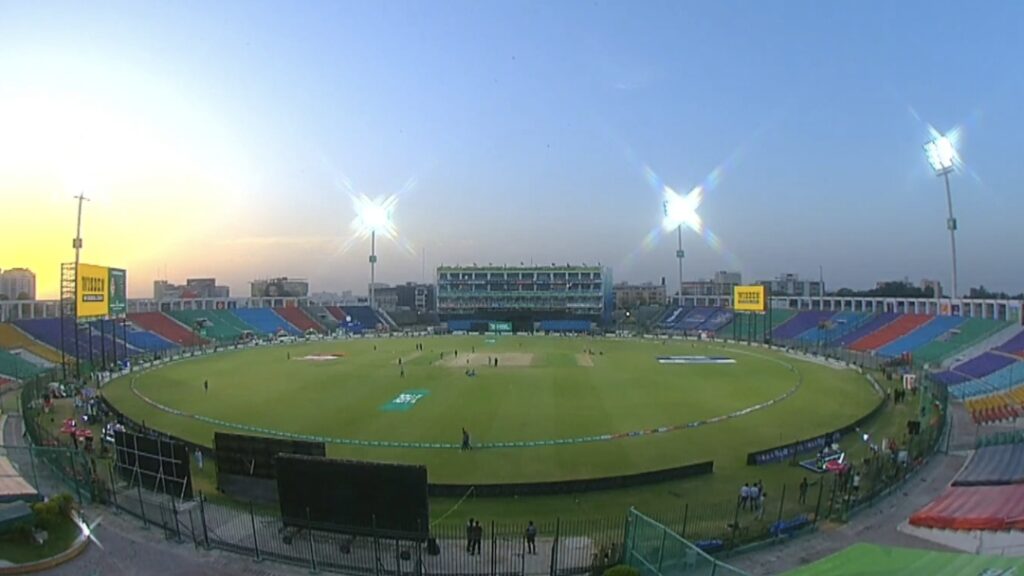
Karachi cricket, at National Bank Stadium, runs counter to the modern T20 cricket theory of going big on every ball or getting out trying. Batters who depend on a one-dimensional strategy built around power hitting and strike rate inflation are likely to struggle. In contrast, those with solid technique, strong balance, a wide range of shots, and the ability to adapt to different phases of the innings are most likely to succeed.
This has also been acknowledged by Sikandar Raza after Lahore Qalandars failed to score 100 in either of its two matches played so far. He emphasized in both the dressing room and in the press conference that Karachi conditions are not for slogging, but for calculated batting, a reminder that success here is shaped more by decision-making based on conditions than by intent alone.
The Karachi venue, National Bank Stadium, is where true batsmanship comes into play, and where, in the presence of classical batters, it is on full display. Players like Babar Azam, Kusal Mendis, Marnus Labuschagne, Devon Conway, Rilee Rossouw, Mark Chapman, Shan Masood and Saud Shakeel have found early success so far by adapting to the pitch and taking control of the game, rather than forcing the game and being controlled by the pitch.
These batters aren’t just technically good, they possess the skills to read and respond to the conditions, rather than sticking to an already decided Plan A with no Plan B. Their performances highlight the skill required to master the challenges of the National Bank Stadium in Karachi and show what needs to be done in different phases.
Phase 1: Overs 1 to 6: New Ball, True Pace and Bounce, High Reward for Intent
The powerplay in Karachi is the only phase where one-dimensional players can benefit but only for small cameos as it offers genuine value for aggressive intent in the start. The ball comes onto the bat nicely with pace and bounce allowing free stroke play through the V and square of the wicket. Importantly, even mistimed shots can travel, leading to top edges, thick outside and inside edges and slight mishit lofts often find or clear the boundary.
We’ve already seen two short cameos turn into match-winning moments. Maaz Sadaqat against Islamabad United built a solid platform from ball one; however he couldn’t convert that impactful innings and ended up top-edging a delivery from Chris Green. Meanwhile Muhammad Haris against Multan last night also couldn’t convert a blistering start of 38 runs in 17 balls into a half-century or a ton due to a hit-at-everything approach.
Phase 2: Overs 7 to 14: Test of Skill vs Conditions
This is where teams excel or falter as the game transitions from a batting-friendly wicket to a slow surface and the condition starts to dominate. The wicket behaves like a batting paradise in the powerplay allowing early scoring and early dominance but the real contest begins once the shine fades and the game moves into the most skill-intensive phase, the middle overs. This phase exposes the difference between a complete batter and a one-dimensional power hitter. The margin for error tightens in this phase, not because the bowler becomes more skillful, but because the surface begins to interfere with bat speed and body transfer, resulting in mistimed strokes.
Cross-batted strokeplay becomes increasingly high-risk due to timing instability created by the grip of the surface. Horizontal bat swings for pulls and cuts are more likely to produce edges, top edges and mistimed shots as the ball no longer arrives at predictable pace and bounce. Strike rotation becomes the only differentiator between control and collapse in this phase and only true batsmanship will allow the batter to conquer this stage. Singles in the pocket and doubles in the gaps help accumulate runs and maintain flow, allowing teams to absorb pressure and not succumb to building dot ball pressure preventing a dismissal cycle as often one wicket leads to another in this phase.
Elite batters such as Babar Azam, Kusal Mendis, Marnus Labuschagne, Steve Smith and Devon Conway are bound to succeed in this phase as they play the ball late and don’t commit early, use soft hands into gaps, rotate strike and pounce on bad deliveries into the gaps. Many Karachi-based batters will benefit from HBL PSL in Karachi as they’ll gain experience in the presence of the masterclass batsmen.
Phase 3: Overs 15 to 20: Death Overs, Wickets in Hand, Execution Phase.
Batters who conquer the middle phase arrive at this stage with full control. Death overs in Karachi are not won by hitting harder. They are won by executing the shots down the ground with the addition of flicks and ramps. Cross-batted shots yield wickets for the bowlers since the pace off usage becomes excessive, the line shifts from 4th stump to wide of off stump, dragging the batter away from the hitting arc that minimizes clean contact, forcing batters to generate their own pace and timing.
Wickets in hand at this stage become a decisive advantage. Abdul Samad capitalized on this scenario with Babar Azam anchoring at the other end for Peshawar Zalmi against Karachi Kings. Samad smacked four sixes as he held his shape, waited for the deliveries to arrive and generated controlled power to send them over the ropes. This late surge was only possible because Kusal Mendis and Babar Azam had already bossed the middle phase with Babar remaining unbeaten. Irfan Khan Niazi also demonstrated how to reset an innings with wickets tumbling in the middle overs. He steadied the chase through intelligent rotation, picking up available singles and doubles to regain momentum built in the powerplay and lost in the middle overs and then shifted gears in the death overs, targeting straight boundaries and flicks alongside Hassan Khan. This calculated transition helped Hyderabad triumph over Karachi.
The Death Overs Lesson
In short, Karachi doesn’t reward panic hitting at the death. Asif Mehmood took 4 wickets in the final over against Islamabad United as batters resorted to desperate hitting. On the other hand, Saad Baig was retired out against Hyderabad when he was already set and had done the bulk of the work in the middle phase. The other big hitters could only accumulate four runs off seven balls. It was a risk taken without fully accounting for the demands of the venue and National Bank Stadium, Karachi, made them pay for it.
The Team That Read the Conditions Best so Far
Peshawar Zalmi fittingly stand out as the only team that understands the venue and the pitch. Their field placements, keeping boundary riders straight at long-on, long-off and fine leg, have smartly forced the batters to hit across the line resulting in the dismissals of Smith, Philippe, Turner and Shan Masood. Kusal Mendis, Babar Azam, Iftikhar Ahmed, and Sufyan Muqeem have been the major contributors as they are executing exactly what the venue demands. The result speaks for itself: Peshawar Zalmi has won all 4 games so far. National Bank Stadium, Karachi, is rewarding Peshawar Zalmi’s preparation, patience and precision.
Conclusion: The Karachi Blueprint
The Karachi blueprint, as it stands, starts with intent, not recklessness. Maneuver the middle phase with intelligence, without succumbing to a changing pitch. Finish with the momentum built earlier. Karachi doesn’t reject aggression, it demands refinement. The venue filters out one-dimensional power hitters and rewards complete batters who can assess, adapt, and execute. It doesn’t test your power; it tests the purity of batting and how you decode the conditions.
